By: Arden Xu 27′

© James Gilbert
For decades, the PGA Tour has been the premier competitive circuit in the world of golf. And for much of that history, the format of competition has remained constant. For those not familiar with golf, it seems like a simple sport: get the ball from the tee into the hole in as few shots as possible. Yet unknown to the ordinary fan lies the business aspect behind golf rounds: how many rounds should be played? How should we schedule tournaments to reward the best golfer? And how does the PGA Tour crown a champion?
For the most part, the competitive format changes in 2026 keep the general form of competitive golf in place, where pro golfers play a 72-hole tournament for 4 rounds over 4 days, with a 36-hole cut to put the best players on the weekend in a primetime TV slot. However, in our ever-evolving world, the PGA Tour needs to readjust in order to deliver an increasingly exciting product to the millions of golf fans there. The PGA Tour is in competition with the NFL, MLB, and all other major sports leagues for fan’s attention, and from CEO Brian Rolapp’s perspective, they need to keep up with them.

© Cliff Hawkins
The 2026 competitive format centers around three big issues.
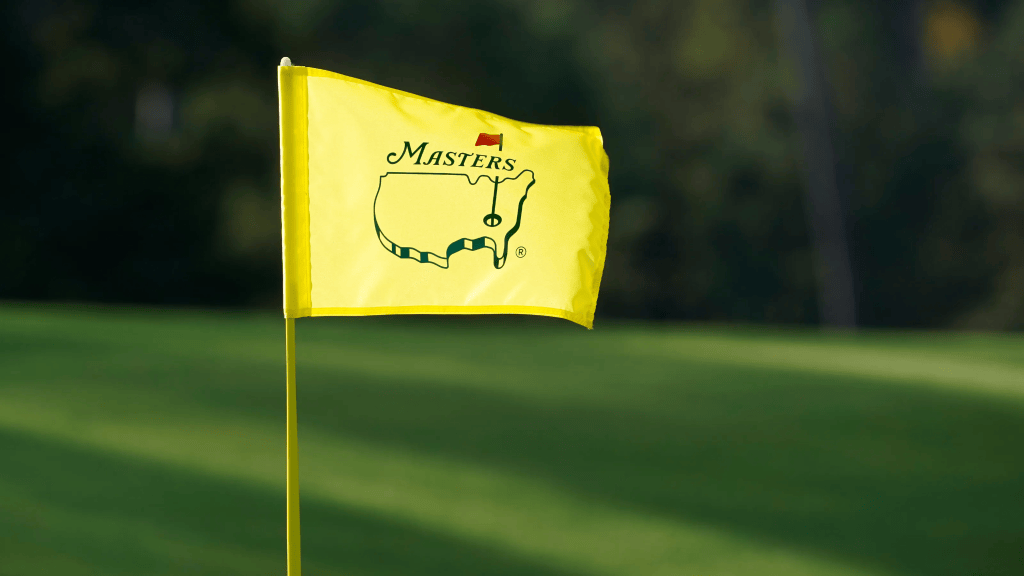
First, the PGA Tour has been forced to acknowledge that the majors — that is, the US Open, the PGA Championship, the Masters, and The Open Championship —- take priority for all players. Every single professional golfer on the PGA Tour schedules their tournaments to best prepare themselves for each of these major tournaments. As the late great Dan Hicks said, “a professional golfer’s legacy is defined by their performances in the major tournaments.” From a pessimistic fan’s perspective, nobody remembers who wins the regular PGA Tour events, but everyone remembers the guy who wins a major tournament. Tiger Woods, the chairman of the Future Competition Committee, has emphasized the need to hold premier PGA Tour events, such as the Pebble Beach Pro-Am, the RBC Heritage, and the Travelers Championship, further away from the majors. In practice, this means preventing the scheduling of these events from being scheduled the week right before the majors, so that players can have adequate time to prepare for each major championship. In their place, alternate series events that are less prominent on the PGA Tour, such as the Anderson Farms Championship or the Barracuda Championship, will be hosted to let the best players rest while giving lower-level PGA Tour players an opportunity to play.
Second (and most substantially), the PGA Tour is creating two separate tracks of competitive play — one called the Championship Series that comprises the best 144 players in the world, and other being the Challenger Series that comprises “emerging talent fighting to return to the top level of the PGA Tour.” For decades, the PGA Tour has had an interesting mix of both prominent players, such as Tiger Woods and Scottie Scheffler, and pro golf journeymen, such as Peter Malnati and Joel Dahmen. While this mixed format has given some players the opportunity to rise dramatically to prominence, it has also confused fans who are very unlikely to recognize these journeymen, and find it odd to see no-name golfers with household names. By separating the PGA Tour into emerging talent and the highest echelon of golf, it gives golf fans more clarity on who to follow, and creates a more consistent basis with which to root for players and cheer for the winners.

Third, the PGA Tour is completely revamping the playoff format and the TOUR Championship, something that addresses one of the core issues with the PGA Tour. For nearly a century, golf analysts have had a difficult time identifying the best golfer in a single season. Unlike the NFL or MLB where a simple playoff bracket would determine the winner of the season in a championship event (like the Super Bowl or the World Series), the evaluation of the best golfer on tour has been a mix of both regular-season wins and major championship performance. And within that measurement was the absence of the PGA Tour Playoffs and the Tour Championship. For the longest time, the Tour Championship was seen by fans as a slightly irrelevant and futile attempt for the PGA Tour to try to make their own prestigious event. There was no satisfying conclusion to the season, and for most fans, the summer-packed PGA Tour season seemed to gradually fade away, as the end of the season coincided with the start of the NFL season.
However, under the new competitive format, the playoffs have completely changed. To the delight of many disgruntled golf fans (like me), the PGA Tour has eliminated the stroke-play format of the Tour Championship and (finally!) implemented match play into their playoffs, where the bracket system will be used to determine a season-long champion. Many golf fans consider match play to be much more exciting, as seen by their vivid passion for international team match play events such as the Presidents Cup and the Ryder Cup. Who wouldn’t want to see a riveting Scottie Scheffler putt on the 18th hole to win the match, or the shock of an underdog to beat Goliath?
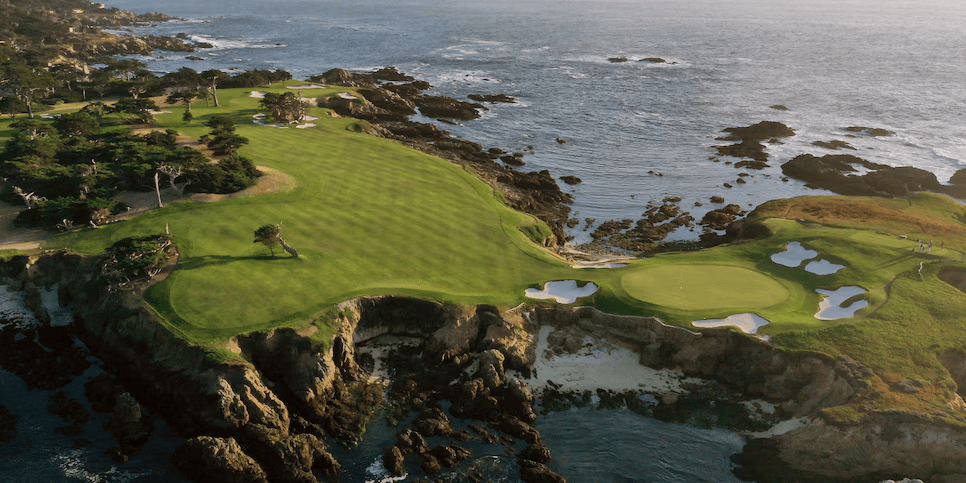
But it’s not just the format that has many golf fans excited. Tiger Woods announced that the playoffs and matches would be hosted “across a rotation of prestigious venues – including courses the modern PGA TOUR has not traditionally been able to feature,” which has gotten golf fans to speculate at the potential golf courses the PGA Tour could be playing at in the future. Cypress Point? Pine Valley? Monterey Peninsula Country Club? For the longest time, the world of golf has been built on a level of exclusivity and keeping people out of mouth-shut country clubs. But to see these golf courses on national television opens these once-exclusive fortresses to the public, and opens a golf course’s views for everyone to enjoy.

Lastly, the 2026 changes have a specific emphasis on expanding the PGA Tour’s international brand. Everyone knows about the PGA Tour — LIV Golf rivalry, and how it has split the golfing world apart. But with the liquidation of LIV Golf and the elimination of LIV as a rival to the PGA Tour, the PGA Tour is taking a trick out of LIV Golf’s playbook. When LIV Golf scheduled events, they hosted them around the world. From South Korea, Australia, South Africa, and Hong Kong, they gave the international community an opportunity to see elite-level golf. From both the media’s reaction and the record-level attendance, it is clear to the PGA Tour that these international markets have true potential to create a profit-producing event. Not only does the PGA Tour have the necessary fans that have passion for the game in these international regions, but the local companies have shown willingness to put in substantial money and sponsor the LIV Golf events. CEO Brian Rolapp and much of the executive leadership has touted the 21st century of golf to be about expanding opportunities for people to play golf, and with these expansion into international events, it will surely seek out to accomplish this goal.
Whether you’re a hater or a lover of these changes, it is undeniable that these changes will have big implications on the future of golf. When Greg Norman founded LIV Golf back in 2021, it made many executives at the PGA Tour realize that they weren’t forward-thinking enough. In a game that is as old as golf, much of the foundations and principles behind the PGA Tour have been about conserving tradition and sticking to unspoken rules. Whether that be tucking in your shirt or always greeting people with a firm handshake, golf has always retained a sense of conservatism and resistance to change. Certainly, there are aspects of the PGA Tour that Brian Rolapp knows that he cannot — and will never — change. However, what I think is the greatest asset of Rolapp is that he knows the game needs to be more progressive. It needs to innovate, it needs to create a more entertaining product, and it needs to make fans excited. Balancing conservatism and progressivism within the changes at the PGA Tour has been at the focus of Rolapp’s tenure, and so far, he has absolutely hit the nail on the head. From the promotion of Youtube Golf, to the new TGL League, and to these new competitive format changes, it has made golf fans excited in a way they have not seen since prime Tiger Woods.
It’s an exciting time to be a golf fan, and I cannot wait to see what the future entails for the game that we all know and love. Brian Rolapp, I’m waiting for it.


Leave a Reply