By: Larsen P and Neel M
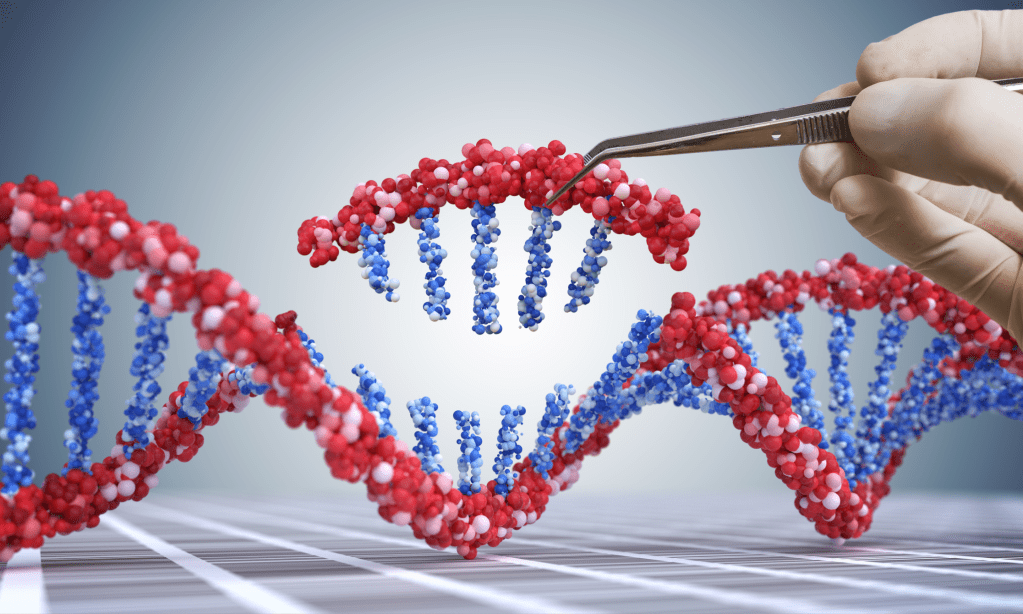
CRISPR, short for Clustered Regularly Interspaced Short Palindromic Repeats, originated not as a human invention but as part of a natural defense system used by bacteria to survive viral infections. When a bacterium is attacked by a virus, it can “remember” the virus’s genetic sequence so it can recognize and destroy it if it attacks again. Scientists realized that if this system could be programmed, it could be repurposed as a tool to cut and edit DNA in almost any location.
But why is the CRISPR revolution happening now?
According to expert Gianne Souza, “Previous technologies were really limited. In order to genetically modify a mouse, for example, it would take 5 to 7 years of work. That was a lot of time in order to manipulate a mammal.”
She remarks that, “It generally targets a 20 to 25-base pair sequence at a time. So any diseases that consist of a very short mutation, like a point mutation, where you’re really just changing one base or a few bases, would be the easiest to manipulate.”
But where CRISPR’s impacts vary is in its application.
“Things like sickle cell anemia are a classic example of a point mutation that has a whole bunch of effects.”
Sickle cell anemia is a sex-linked disorder affecting approximately two million people worldwide. It involves a single gene mutation in the hemoglobin gene in red blood cells, which leads them to “sickle”, turning into the trademark curved shape rather than the normal pill-like form. This disorder can cause terrible pain throughout the body and often results in a shortened lifespan and limited mobility.
Another application of CRISPR is, surprisingly, involved with an unexpected farm animal: cows. Collections of bacteria, called microbiomes, live in the guts of cattle. These microbiomes release methane, a greenhouse gas, and contribute to global warming. They are held accountable for around ⅔ of livestock emissions and 14.5% of total global warming. A recent application of CRISPR is targeting and destroying these harmful bacteria.
Despite the possible upsides, there is much controversy surrounding the use of CRISPR as well. In the modern era, with rapid advances in the technological and medical fields, this technology stands out as a powerful tool that requires special attention to regulate and contain its abilities.
The Geneva Statement on Heritable Human Genome Editing warns that “unequal access to perceived genetic ‘upgrades’ could then exacerbate the recent dramatic rise in socioeconomic inequality.” If genetic enhancements are available on the free market, the best ‘upgrades’ will only be accessible to the wealthy, leading to the formation of a genetic upper class, exacerbating existing wealth gaps, and rendering social mobility nearly impossible. This would make inequality biological, not just social, and reinforce existing disparities in education, health, and opportunity.
“I feel like we can’t handle normal life right now.” This is not just a concern shared by Gianna Souza, but also by many leading officials around the world. “
“A ‘Weapon of Mass Destruction,” James Clapper calls this technology. The former U.S. Director of National Intelligence, who included genome editing on the list of national security threats, stated its misuse “probably increases the risk of the creation of potentially harmful biological agents” with “far-reaching economic and national security implications.”
The ethical concerns are equally complex. As Souza explains, genome editing is a slippery slope: if it’s acceptable to fix a single mutation that causes severe disease, where do we draw the line? Could we one day select embryos for traits like height, intelligence, or other enhancements? Technologies like IVF already allow some selection based on chromosomal abnormalities, but CRISPR could dramatically expand those possibilities, raising the specter of new forms of social inequality. In a world of clashing national interests and players who have everything to gain from a biological conflict, who can we really trust to regulate this powerful and potentially dangerous technology?
When asked who is in the best position to regulate CRISPR, Gianne Souza said, “Time and time again, scientists have shown they can’t regulate themselves.”
It is clear that genome editing is not a necessary step in human evolution, but instead a shortcut with disastrous implications. It produces an inequality that is inescapable and innate, based solely on your genetic package, and eliminating any possibility of social mobility. Inscribed in DNA is a person’s heritage, their ancestry, and personal tendencies, but inside this infinitesimally small chain of genetic code also lies their humanity. The story of genetic engineering is the story of us, and if we are not careful, it may be our last page.


Leave a Reply