…
By: Revant D. ‘28
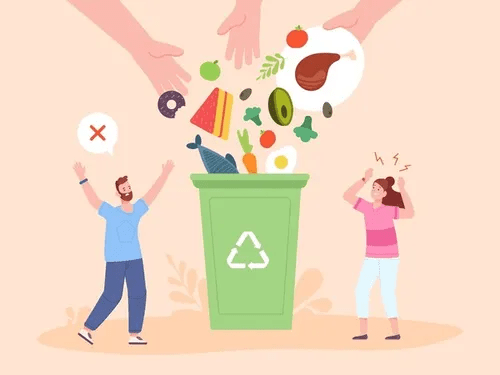
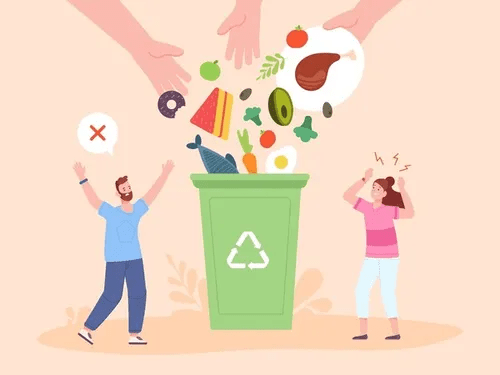
When we sprint to the cafeteria every day during lunch time, most of us think about what’s on our tray and not what ends up in the trash. But here’s a surprising fact: every year, U.S. schools produce as much as 530,000 tons of food waste. That includes everything from uneaten food to packaging, disposable plates and utensils, and more. Food waste may be invisible after the lunch bell, but its impacts are far reaching. When uneaten meals head to landfills, they produce methane—many times more potent than Carbon dioxide gas—and drain the resources that grew, transported, and cooked that food.
California has set ambitious organics-reduction targets with the SB 1383 (Short-Lived Climate Pollutant Reduction law) that went into effect in 2022 and affects all Californians. The law addresses “short-lived climate pollutants” or the greenhouse gases caused when food is sent to landfills instead of compost. The law requires that everyone, such as residents, businesses, and schools, keep compostable waste out of our landfills.
California schools are now required to donate edible leftover food and compost organic waste instead of sending it to landfills. The law also pushes schools with an on-site food facility to donate edible surplus food rather than throw it away, and all schools must separate organic waste and educate staff and students about proper sorting.
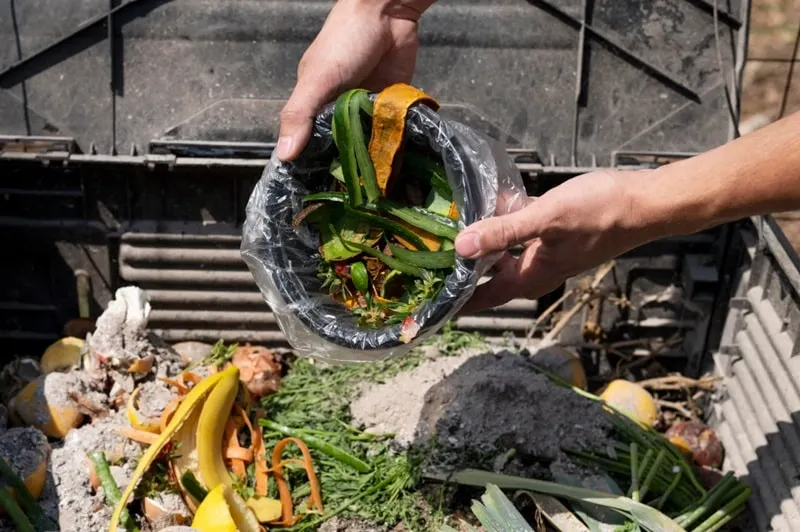
Throughout California, school food professionals and their districts are leading the charge towards a “zero-waste” future. They are promoting schools to:
Review: Conducting an audit of the food being wasted can provide a better understanding of how much food a school discards and which types are most frequently wasted.
Reduce: Schools can weigh food waste or do “tray audits” to see what students are leaving behind. This helps kitchens adjust menus and portion sizes. Also, from scratch cooking, rather than serving prepackaged items, goes a long way towards minimizing packaging and food waste.
Recover and Recycle: Ever finish your sandwich but not touch your apple? Share tables let students place unopened or whole items for others to take, instead of tossing them. Extra food can even be donated on the same day.
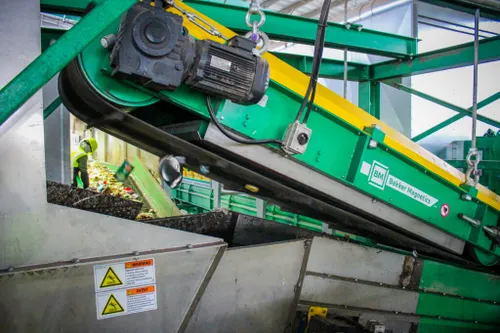
Across California, schools are finding creative ways to reduce food waste and put uneaten food to better use. On many Los Angeles Unified School District campuses, “sharing tables” allows students and teachers to return unopened or uneaten items so classmates can take them, even donating the leftovers at the end of the day. Districts like Irvine Unified and Alhambra Unified have partnered with food banks and nonprofits to recover and redistribute surplus food, while schools in Marin County work with Zero Waste Marin to compost food scraps and recycle packaging. In Southern California, Burbank’s Bret Harte Elementary has even adopted a high-tech system that transforms 100 pounds of food waste into just 20 pounds of nutrient-rich compost, which can then be used for fertilizer, animal feed, and other sustainable purposes.
The California state law SB 1383 aims to reduce statewide disposal of organic waste by as much as 75%. For the success of this law, California schools need to gear up and take proactive actions to be partners with the government in reaching its goal of “Zero Waste” California. Although we are not quite there yet, it is clear that, overall, California schools are making a conscious and noticeable effort in preventing excessive food waste.



 The Gryphon Gazette
Leave a comment