…
By: Kate PB. ‘26
On September 10, 2025, political commentator and Turning Point USA founder Charlie Kirk was shot and killed while debating with students at Utah Valley University. His assassination soon became a flashpoint in America’s ongoing struggle over what free speech should protect, and how we respond when grief and politics collide.
The reaction was immediate, but remarkably split. President Donald Trump called Kirk a “great American hero” and “a martyr for freedom,” later announcing he would posthumously award him the Presidential Medal of Freedom.
To many conservatives, Kirk’s death symbolized the cost of standing up for American values. But for others, including many college students who had clashed with his organization, Turning Point USA, his death reignited long-standing questions about the impact of hateful rhetoric and the blurred line between activism and provocation.
In the wake of the killing, several public employees were suspended for social-media posts seen as mocking or celebrating Kirk’s death. Federal officials also floated visa revocations for non-citizens who posted “insensitive” content. Civil-liberties groups like the ACLU condemned the reaction as government overreach, arguing that “the First Amendment does not end where public grief begins.”
So, in other words, instead of bringing people together, the moment revealed how fractured the nation already was.
The Debate Over Free Speech Itself
In the days after the shooting, the argument over what free speech really means erupted across social media and college campuses. Many conservatives argued that Kirk had been targeted for simply exercising his constitutional right to speak, and that violence had crossed into a sacred space for the free exchange of ideas and debate.
Others countered that while no one deserves violence, Kirk’s rhetoric itself had long walked the edge of what many consider hate speech. Turning Point USA events frequently sparked protests for what critics described as attacks on LGBTQ+ rights, racial equity programs, and public education. “Calling that ‘just free speech’ ignores the harm words can do,” one Stanford student wrote in The Nation, “especially when they’re used to justify discrimination.”
Still, even Kirk’s fiercest opponents drew a line between speech and violence. Progressive commentators like Joy Reid and Alexandria Ocasio-Cortez emphasized that condemning the killing did not mean endorsing his message. “We can reject hate and reject murder at the same time,” Reid said on MSNBC, calling the shooting “a tragedy that should remind us what happens when outrage becomes the only language people speak.”
Legal scholars have pointed out that the First Amendment protects almost all political expression, regardless of how offensive, but it doesn’t shield anyone from criticism or consequences. The problem, as one professor told The Washington Post, is that “too many Americans think being disagreed with is the same as being silenced.”
Jimmy Kimmel Steps Into the Fire
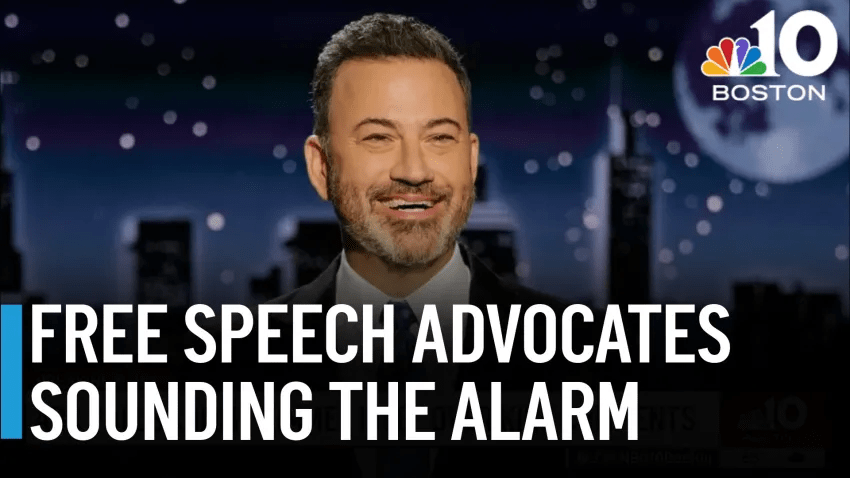
Late-night host Jimmy Kimmel became the next flashpoint. During his ABC monologue, he accused conservative media of “trying to score political points” from Kirk’s murder: “We hit some new lows over the weekend with the MAGA gang desperately trying to characterize this kid who murdered Charlie Kirk as anything other than one of them.”
Two days later, ABC suspended Kimmel’s show indefinitely, citing “ill-timed” remarks. President Trump celebrated the move, calling Kimmel “ratings-challenged” and claiming the network showed “courage.”
The decision ignited an uproar. Celebrities, journalists, and free-speech advocates denounced the suspension as an act of censorship.
At the heart of the argument was a larger question: what constitutes ‘free speech’ when others determine who gets to hold a microphone?
Networks have the legal right to pull a host; viewers have the right to protest. However, when powerful figures, including the president, celebrate silencing a critic, the weight becomes even more significant.
When Kimmel returned a week later, his audience hit 6.2 million, the show’s largest in years. He opened by saying: “We can mourn a person and still question what they stood for.”

What Does This Mean?
Charlie Kirk’s death was tragic. But the reaction to it reveals how America’s concept of free speech is bending under emotional weight.
In moments of crisis, the most natural impulse is often silence. However, democracy itself isn’t quiet; it’s argumentative and messy. A free society depends on whether we can keep speaking, even when it challenges power, and listen not just to defend ourselves, but to understand one another.

 The Gryphon Gazette
Leave a comment