By Ethan L. ‘25
Warning: This article may contain spoilers.
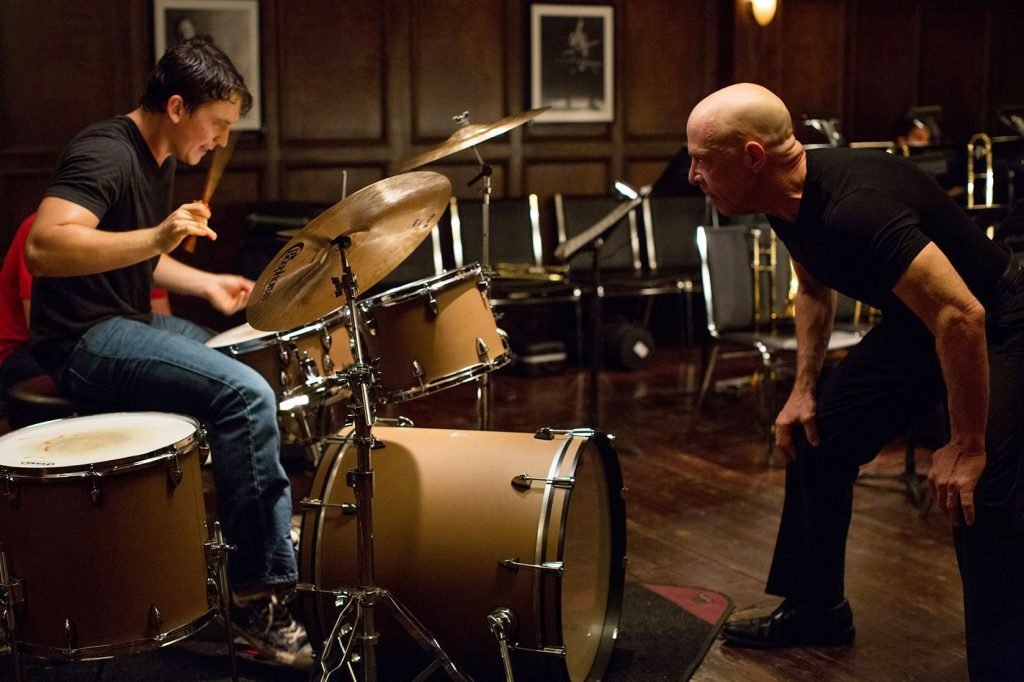
Intense. Raw. Relentless. These are just a few adjectives that truly encapsulate Damien Chazelle’s 2014 cinematic powerhouse, Whiplash. The film narrates the story of Andrew Neiman, a young, ambitious drummer played by Miles Teller, who is accepted to the prestigious Shaffer Conservatory of Music. Andrew soon realizes that he has to deal with the unforgiving, ruthless, and abusive bandleader, Terence Fletcher, played by J.K. Simmons. Whiplash takes the viewer on a compelling journey with only two central characters. Even today, the film keeps audiences across the globe fascinated by the recognition of immersive storytelling and cinematic intensity. Here is what makes Whiplash stand out.
- Performances
Before Whiplash, J.K. Simmons was known as a character actor, but his role as Terence Fletcher won him an Academy Award for Best Supporting Actor. Additionally, Miles Teller’s intense portrayal of Andrew Neiman also brought him mainstream recognition. The equation of this film’s power could not be solved without these performances. The abusive mentor-student relationship, Andrew’s simmering rage, and Fletcher’s relentless cruelty are burned into the minds of audiences long after the credits roll. Even things like the visual contrast of Fletcher’s severe black attire and imposing presence add to his menacing aura. Both Andrew and Fletcher are determined to achieve greatness, sacrificing personal happiness and relationships in the pursuit. Their dynamic is what pushes the film to greatness.
- References
Whiplash is driven by the power and greatness of several classics. The rhythmic editing, aggressive camera work, and raw jazz score are just additional compositional elements to its bold direction and unfiltered dialogue to create an experience equally as exhilarating as it is harsh. Similar to Amadeus, There Will Be Blood, and Black Swan, Whiplash focuses on the protagonist and antagonist forces, both flawed yet compelling. The movie doesn’t deal with clear-cut moral answers. Andrew and Fletcher would go overboard to attain greatness, sometimes even sacrificing their pride and integrity in the process. Chazelle leaves it to the viewer’s interpretation of those characters and their choices, making this movie more timeless.
- Structure
Whiplash is concise. That is why so many viewers fell in love with the first viewing. It comes across as an independent indie film, but you get a masterclass of sounds, colors, and emotions. The focused story cuts straight to the heart of its drama. Its simplicity doesn’t detract from its complexity. The almost minimalist design is what makes the raw energy in the film so strong. The music scenes are visually intense, bathed in warm, golden tones reminiscent of brass cymbals, yet they never distract from the tension between the two main characters. With a brisk runtime of 106 minutes, every scene serves a clear purpose, leaving no room for confusing or unnecessary subplots. This clarity makes the film immersive, and the story flows like a jazz composition. It is dynamic, bold, and compelling from start to finish.
- Finale
Many think the film’s ending unites everything—its intense writing, character-driven story, striking visuals, and powerhouse performances—in a climactic, unforgettable conclusion. Andrew’s final drum solo is a triumphant but haunting victory. He achieves artistic success, but at what personal cost? He gains that small ounce of recognition from Fletcher that he wanted for the entire film but has destroyed himself in the process. But is that what makes him great? Had Fletcher won in finding himself the next Charlie Parker? Was this his plan for the entire film? The ambiguous resolution, where neither Andrew nor Fletcher emerges as a clear victor, leaves a chilling impression on viewers. Whiplash is sure to be remembered not only for its unforgettable performances and intense storytelling but also for its contribution to American cinema as a modern classic.




 The Gryphon Gazette
Leave a comment