By Revant D. ‘28
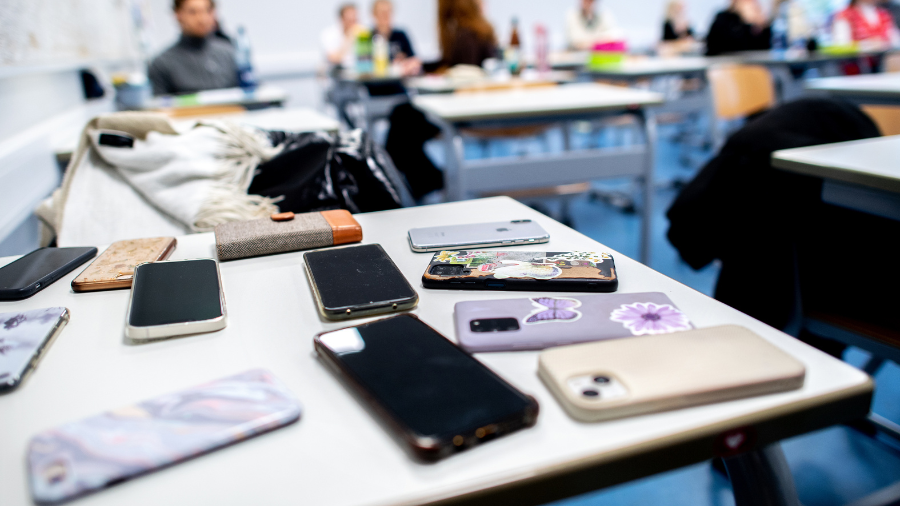
Imagine walking into school without your phone—no notifications, group chats, or TikTok breaks between classes. How would your day change? Across California, schools are making this a reality with new phone bans, sparking debates about whether it’s a solution for better student engagement and focus or just another infringement of personal freedom.
In July this year, Governor Gavin Newsom signed the bipartisan Assembly Bill 3216, also known as the Phone-Free School Act. This act requires every school district, charter school, and county office of education to adopt a policy limiting or prohibiting the use of smartphones by July 1, 2026. The government feels that this act will improve mental health, garner academic success, and promote the social well-being of students in California.
Prior to this event, Governor Newsom had already sent letters to school districts across California urging them to implement policies restricting phone usage on campus. Many school districts have already created such policies. Los Angeles Unified, the second-largest school district in the state, is planning to ban phones by January 2025.

Many parents and students support the ban, arguing that smartphones hinder students’ ability to concentrate in class and contribute to mental health issues due to social media exposure. Governor Newsom emphasized that the new law is designed to shift students’ attention toward academics, social interaction, and their immediate surroundings rather than their screens. He stated, “This new law will help students focus on academics, social development, and the world in front of them, not their screens, when they’re in school.” However, opponents of the bill contend that prohibiting phones in schools may impose additional burdens on teachers and could leave students unable to reach their parents during emergencies such as school shootings.
In the Santa Barbara school district, which introduced a phone ban during the 2023-24 school year, teachers have reported increased student engagement and socialization and reduced bullying. While such policies have proven successful across the state, implementing them requires significant time and effort. One proposed solution is using specialized pouches from a company called Yondr. These pouches lock the phone inside until the user exits the phone-free space and taps the pouch on a designated unlocking base. This approach allows students to keep their phones with them while ensuring they remain undistracted.
However, students have found ways to bypass the system by cutting open the pouches or substituting their phones with cardboard or outdated devices. Although phone-free schools offer a promising approach to minimizing technological distractions, the methods for enforcing such policies still need to be refined to create an effective learning environment.

At Crystal, the administration is working to balance students’ access to their phones with minimizing distractions and fostering engagement. Ms. Kowal, the Head of Upper School, shared that a complete phone ban is unlikely as the newly established phone committee is more focused on gathering data about student phone usage on campus first. This committee of students, parents, and staff was formed to shape an effective phone policy collaboratively.
This is the only committee at Crystal that includes all three groups, emphasizing the administration’s commitment to a fair, inclusive approach. Ms. Kowal noted that a recent campus survey found that nearly half of Crystal students use their phones once or twice an hour, highlighting the importance of a thoughtful solution that resonates with students’ habits. That being said, Ms. Kowal also noted that during the school leadership retreat, all students were phone-free, encouraging students to engage and socialize far more than usual.
Restricting cell phones on the Crystal Upper School campus is a sensitive issue with strong opinions from students, parents, and PAC members. While parents and PAC members largely agree that phone use on campus hinders students’ ability to learn, many students feel that restrictions or a potential phone ban are unfair and invasive. One student remarked, “Getting rid of cell phones is unwarranted and an invasion of freedom of choice.”
Ultimately, the Crystal administration must carefully balance students’ desire for access with limiting excessive phone use to enhance academic focus and foster meaningful connections. In a world of rapidly advancing technology, schools should help students develop skills to manage their tech use effectively—empowering them to leverage its benefits rather than be unprepared for its challenges.




 The Gryphon Gazette
Leave a comment