By Alex M. ‘27
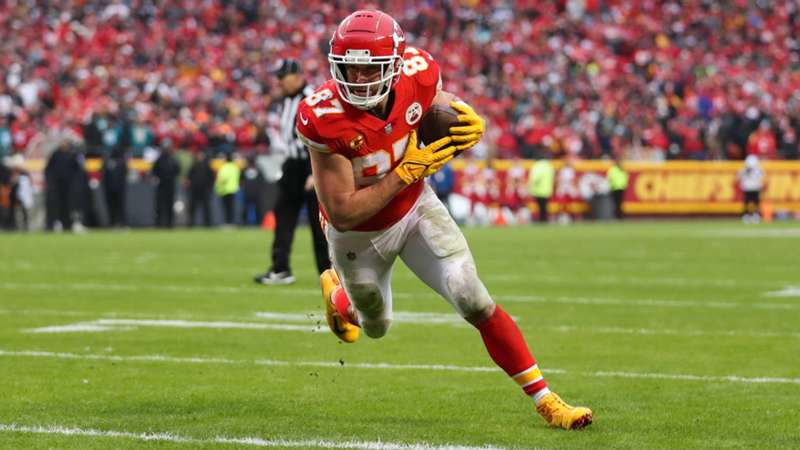
The inception of the National Football League (NFL) traces back to 1920 in Canton, Ohio, under the name of the American Professional Football Association, comprising a modest assembly of 10 geographically diverse teams. In its first decade, the league witnessed an average scoring of approximately 9.5 points per game, a wide contrast to teams now who routinely notch up around 23 points per game over the past decade. This progressive escalation in scoring reached a major point in the recent season, exemplified by a single team tallying a shocking 70 points, a feat equivalent to the average score of seven games in the 1920s era. The consistent landscape of modern NFL games epitomizes a relentless offensive onslaught, prompting speculation on the league’s deliberate strategy and the expanding emphasis on offensive prowess.
The connection between superstar players and touchdown spectacles embodies a fundamental economic principle: revenue generation. The offering of high-scoring games, epitomized by thrilling shootouts like a 38-35 nail-biter, far eclipses the appeal of low-scoring encounters such as a 10-7 game, catering to the entertainment preferences of the audience. Notably, the departure of iconic figures like Tom Brady from franchises directly correlates with fluctuations in viewership statistics, exemplified by a decline from 25 million viewers to 15 million following his exit from the New England Patriots in 2019. This dramatic shift underscores the indispensable role of superstar athletes in driving viewership and, consequently, league profitability.
However, the relationship between viewer preferences and league economics intersects with broader concerns regarding player safety and the integrity of the sport. In a bid to mitigate injuries and safeguard marquee talents, the NFL has implemented rules aimed at curbing defensive aggression, arising criticism from both players and fans alike. Notably, the recent ban of hip-drop tackles, representative of the league’s cautious approach to physicality, has drawn concern from (former) defensive stars like JJ Watt, who equated the evolving regulations to a progression towards flag football—a far cry from the hard-hitting spectacle that has long defined the sport. The unintended consequence of these safety measures is a departure of defensive prowess, thereby affording offenses a major advantage and compromising the competitive balance integral to the sport.
Teams prioritize offense not solely for ticket sales, but also for securing victories. As previously noted, the balance of power has shifted, with defense playing second fiddle to offense. Dominance hinges on a formidable offense; evidenced by the fact that the 2024 Super Bowl Champions ranked 9th in yards per game, the 2023 Champions ranked 1st, the 2022 Champions ranked 13th, and the 2021 Champions ranked 3rd. An efficient offense is a prerequisite for championship contention.
This strategic shift hasn’t gone unnoticed. In the latest NFL draft held on April 25th, 2024, a staggering 23 out of the 32 first-round picks were offensive players. In high contrast, half a century prior, during the 1974 NFL draft, only 13 out of 26 selections were offensive players, with the first pick being a defensive player. This shift underscores the evolving culture within the league, where offensive firepower is increasingly prioritized as the pathway to success on the gridiron.
The most important position on offense is the quarterback, as he is the conductor and runs the offense. It has been deemed the most valuable position in football and is by far the highest paid one. Only one Super Bowl-winning team in the past 36 years had a quarterback who had not made a Pro Bowl in his career (Joe Flacco and the Ravens). Without a quarterback, an offense is insufficient. And as mentioned earlier, an insufficient offense means fewer wins in the modern day NFL.

Beyond the quarterback position, a confluence of factors has propelled the NFL into an era where touchdowns reign supreme. Strategic innovations, technological advancements, and shifting cultural paradigms have all contributed to the ascendance of offense as the driving force behind the league’s evolution.
Strategic innovations in offensive schematics have transformed the game, with coaches and coordinators leveraging analytics and data-driven insights to optimize scoring opportunities. The frequency of spread offenses, characterized by wide receiver-centric formations and intricate route combinations, has revolutionized offensive strategy, enabling quarterbacks to exploit mismatches and dissect defensive coverages. The campaign of the hurry-up offense, popularized by quarterbacks like Peyton Manning and Aaron Rodgers, has further compounded defensive despairs, depriving opposing defenses of crucial moments to regroup and adjust.
Moreover, technological advancements in training methodologies and player development have catalyzed offensive dominance, fostering a new generation of elite athletes capable of pushing the boundaries of physicality and athleticism. From state-of-the-art training facilities to cutting-edge recovery protocols, franchises spare no expense in cultivating the next wave of offensive superstars, investing heavily in talent acquisition and player retention strategies designed to maximize offensive output.

Cultural shifts within the fanbase have also played a pivotal role in shaping the NFL’s offensive landscape. In an era characterized by instant thrill and attention spans measured in seconds rather than minutes, the appeal of high-scoring shootouts and electrifying playmakers resonates deeply with today’s audience. Social media platforms and digital streaming services have increased access to NFL content, increasing the impact of viral highlights and awe-inspiring feats of athleticism, thereby elevating offensive stars to cult-like status and driving engagement levels to unprecedented heights.
However, amidst the euphoria surrounding offensive innovation and record-breaking performances, fundamental questions linger regarding the long-term viability of this paradigm. While the offensive-centric approach has undoubtedly boosted viewership numbers and revenue streams, it has also unintended consequences that threaten to compromise the integrity of the sport.
Foremost among these concerns is the decay of defensive prowess and the diminishing role of defensive strategy in shaping game outcomes. As offenses continue to evolve and diversify, defenses find themselves perpetually playing catch-up, struggling to devise effective countermeasures against the onslaught of aerial assaults and explosive playmaking. The lack of elite defensive talent and the growing emphasis on offensive firepower has contributed to a noticeable decline in defensive performance, resulting in lopsided contests and a perceived imbalance in competition. For example, in just this past season, besides 2 teams, all playoff teams were top 15 offenses. Defensively, however, 9 out of the top 17 teams did not even make the playoffs.

Furthermore, the relentless pursuit of offensive excellence has fostered a culture of risk-taking and high-stakes decision-making, with coaches and players alike prioritizing aggressive play-calling over conservative strategies. While this approach has yielded spectacular results on the scoreboard, it has also heightened the frequency of turnovers and costly mistakes, undermining the fundamental principles of ball security and field position management.
In light of these considerations, it becomes vital for the NFL to strike a balance between offensive innovation and defensive resilience, ensuring that the integrity of the sport is preserved.
Ultimately, the evolution of the NFL into an offense-oriented league represents a double-edged sword, offering unprecedented excitement and entertainment value while also posing significant challenges and integral dilemmas. As the league navigates the complexities of an ever-changing landscape, it must remain vigilant in its commitment to upholding the core values of integrity and fairness, thereby ensuring that the spirit of the game endures for generations to come.



 The Gryphon Gazette
Leave a comment