By: Ethan L. ‘25
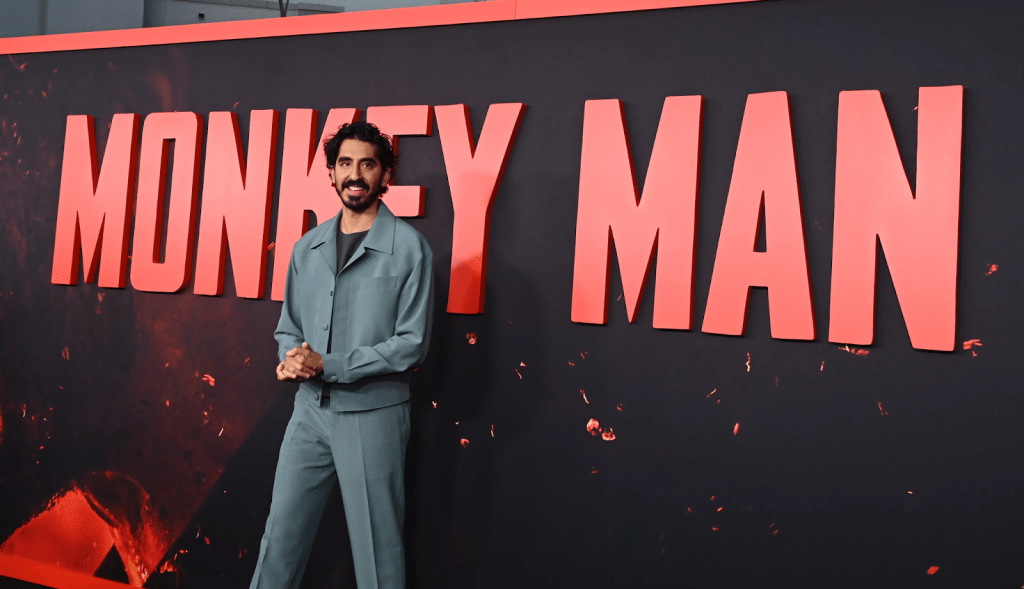
Monkey Man is a 2024 action thriller directed and co-produced by Dev Patel, marking his first film. Patel co-authored the screenplay alongside Paul Angunawela and John Collee. The film features an ensemble cast that includes Patel himself, Sharlto Copley, Pitobash Tripathy, Vipin Sharma, and many more. The movie made its debut at the South by Southwest Film Festival on March 11, 2024, and was later released across theaters in the United States and Canada by Universal Pictures on April 5, 2024.
Dev Patel fully invests himself in Monkey Man, and while not every element perfectly blends, his enthusiasm is palpable in a genre often perceived as formulaic. As writer, producer, director, star, and even someone who sustained injuries during production, Patel’s wide range of influences, including Bruce Lee, Sammo Hung, The Raid, and Bollywood, are evident. Despite starting production before Covid and facing numerous challenges—acknowledging Jordan Peele for “saving” the project—the film’s very existence feels like a triumph of passion, which is infectious among viewers. Monkey Man shines when it successfully uses these diverse inspirations, and its less polished moments are easy to overlook, dismissible as side effects of Patel’s ambition to distinguish his work from typical action films.
The narrative centers on Patel’s character, known only as ‘Kid,’ a fighter who dons a gorilla mask and battles for money under the management of a dubious promoter (Sharlto Copley). Despite frequent defeats and injuries in his pursuit for extra cash, Kid’s resilient gaze reveals his determination. After a theft, he secures a job at a high-profile club, bringing him into contact with influential figures, including those who have previously wronged him. Monkey Man may surprise viewers with its structure—extended build-ups followed by intense action scenes. Unlike many action films adorned with a Hollywood logo, it offers raw, visceral combat influenced by global cinema (much like John Wick), making it both unpredictable and enthralling. The dynamic cinematography and sharp editing amplify the film’s raw energy.
However, the film does stumble in places. It dives into complex themes like politics, religion, and social issues, which can feel awkwardly integrated to those unfamiliar with the context. Patel also leans heavily on flashbacks, perhaps overly so, as if to bolster the narrative’s emotional weight between fight scenes. Moreover, some narrative sections seem rushed, possibly to maintain audience engagement during quieter moments. Yet, Patel’s dual role as actor and director showcases his multifaceted talent, hinting at the potential for future films to refine his narrative and visual style. Monkey Man not only introduces a potential action hero but also signals the emergence of Patel as a significant force in filmmaking, suggesting that as he gains the opportunity to create more films, his storytelling will likely evolve into something even more impactful.




 The Gryphon Gazette
Leave a comment